


Updated on: 2026-10-23
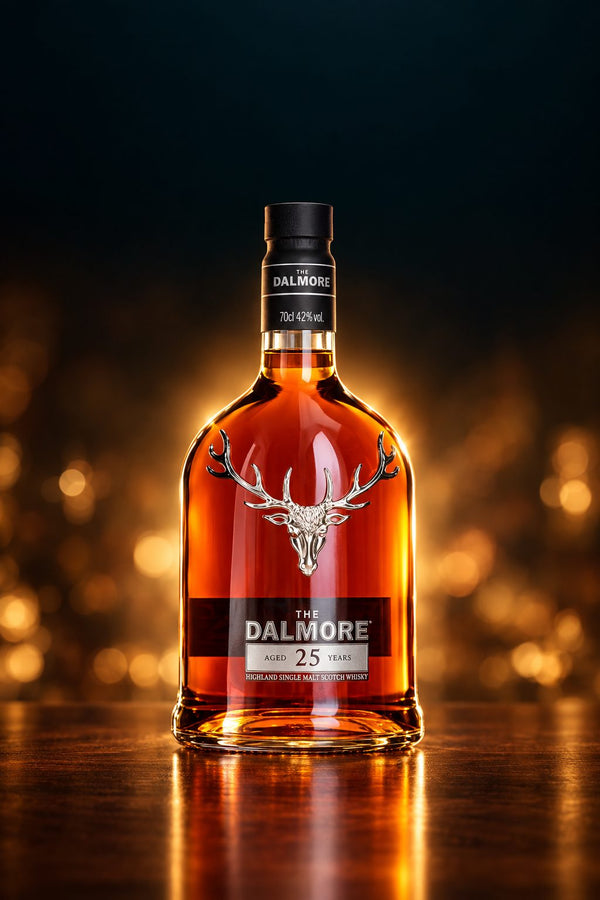
Dalmore 25 Year Old represents the intersection of patience, craft, and measured cask management. It is a whisky designed for careful sipping, with layers that develop from the first dram to the last. In this guide, you will learn what to look for on the nose and palate, how to serve it properly, and how to evaluate its style with confidence. You will also find practical purchasing and storage considerations for long-term enjoyment.
What Dalmore 25 Year Old Signifies
Why 25 Years of Maturation Matters
What Dalmore 25 Year Old Signifies
Dalmore 25 Year Old is a single malt Scotch whisky that communicates a particular standard: depth, balance, and an extended maturation window. The phrase “25 year” does more than state age. It signals that the spirit has had time to soften harsh edges, integrate cask character, and build a more coherent flavour structure.
For many drinkers, this age statement also functions as a promise of intent. A whisky at this level is not typically designed for speed or mixing. Instead, it is meant to be assessed slowly, with attention to aroma, texture, and finish length. When you approach it with that mindset, the experience is usually more rewarding than when it is treated as a casual pour.
Why 25 Years of Maturation Matters
Long maturation changes whisky in several measurable ways. Over time, the interaction between spirit and wood becomes more integrated. Faint notes often become clearer, while sharper, younger impressions tend to round off. In practical terms, extended maturation can increase perceived complexity, though it does not automatically guarantee sweetness or “better” flavour for every palate.
At 25 years, you may expect a whisky that feels more cohesive. Aromatic components can link together into a smoother progression. Meanwhile, the finish can lengthen, often presenting a gentle return of earlier flavours rather than a single abrupt stop.
It is also worth noting that maturation is not the only variable. Cask selection, refill history, and blending decisions all affect outcomes. Age is a key indicator, but the final sensory character depends on the full production process.

Warm cask textures, layered aromas, slow tasting cues
Key Benefits for Drinkers
- Greater flavour integration: Extended maturation often produces a smoother arc from nose to finish.
- More nuanced aroma: Expect a broader spectrum of scents that unfold with air exposure.
- Improved mouthfeel: Higher maturity commonly contributes to a more refined texture on the palate.
- Time-efficient enjoyment: A smaller pour can deliver a complete tasting experience.
- Collector-friendly appeal: Age-led bottlings are often treated as milestones within a whisky portfolio.
If you enjoy returning to the same bottle over time, a mature single malt can also reveal subtle shifts as it opens in the glass.
Tasting Profile to Expect
When evaluating Dalmore 25 Year Old, it is helpful to think in layers rather than single notes. Most mature whiskies present an early impression, a middle palate movement, and a finish that carries echoes of the nose.
Nose: You may encounter a combination of warm fruit character, gentle spice, and deeper, darker tones that become clearer as the whisky breathes. Small changes in temperature and glass shape can influence the aromatics, so allow a short pause before judging.
Palate: The palate often reads as structured and rounded. You may notice a balance between rich sweetness, aromatic warmth, and a controlled depth that prevents the drink from feeling one-dimensional. Look for a progression: initial richness, a mid-palate layer, and a final signature note as it fades.
Finish: At this maturity level, finishes are frequently long and repeatable. Instead of burning away quickly, the whisky tends to leave a lingering impression that can include spices, dried fruit themes, and subtle wood influence.
Because individual cask lots can vary, your exact note mapping may differ. Treat this as a framework for evaluation rather than a checklist.
Step-by-Step Guide
Start with the right glass
Use a tulip-shaped or nosing glass. Narrow openings concentrate aromatics and support a clearer reading of the nose. Avoid very wide tumblers if you want maximum detail.
Let it open briefly
Pour a small amount and wait a few minutes. Air exposure often makes the difference between a flat first impression and a fully expressive first nose.
Judge the nose in three moments
- First sniff: identify the immediate direction.
- Second sniff: observe how that direction develops.
- Third sniff: look for secondary aromas that arrive later.
Take a controlled taste
Take a sip that is small enough to control airflow and warmth. Let it sit across the tongue for a moment before swallowing. This approach helps you distinguish sweetness, spice, and any drying wood sensation.
Evaluate the finish
After swallowing, track how long flavours remain and whether the finish returns to earlier notes. A mature whisky usually offers continuity rather than a sudden drop-off.
Consider dilution carefully
If you add water, use only a few drops and reassess. Dilution can lift aromatics and soften intensity, but too much can thin the structure. For many drinkers, neat tasting is the best baseline; water should be used as a tool, not a default.
How to Choose and Buy
Buying a mature single malt is not only about age. The purchasing decision should also consider authenticity, presentation, and the conditions under which the bottle has been stored.
- Check provenance: Prefer reputable sellers and clear product listings that align with the bottle you intend to purchase.
- Review availability of format: Confirm whether you are buying a bottle size and packaging that suits your storage approach.
- Look for relevant collections: If you are building a themed whisky shelf, you may also explore curated ranges such as Dalmore selections.
- Assess your tasting goal: If the aim is serious tasting, prioritise format and bottle condition over price alone.
For broader discovery around established styles, you may also browse old and rare whisky to compare mature profiles and cask-led characteristics.
Pairing and Serving Suggestions
Dalmore 25 Year Old is best served with a food plan that respects its complexity. The objective is not to cover the whisky, but to create gentle contrasts that enhance perception.
Smoked or savoury elements: A moderate smoky edge can make the whisky feel more rounded, particularly when the palate contains warming spice.
Dark chocolate: Choose dark chocolate with minimal bitterness. The aim is to mirror the depth without overpowering the finish.
Hard cheeses: Mature cheese, served in small amounts, can highlight aromatic richness. Keep portions restrained so that the whisky remains the centrepiece.
Dessert sauces: Caramel-like sauces and lightly spiced toppings can echo perceived sweetness, but they should not be overly sugary.
Serving temperature matters. Many whisky specialists recommend a cool room temperature glass. Excessive warmth can cause the aromatics to dominate at the expense of clarity.

Clinked glasses with aroma swirls and quiet ambience
Care and Storage
Long-matured whisky should be treated with consistent care. Bottle condition often has a direct impact on enjoyment, even when changes are subtle.
- Store upright: Keep the bottle standing to maintain contact with the intended level of spirit in the neck.
- Maintain stable temperatures: Avoid large fluctuations that can affect how the whisky settles.
- Limit light exposure: Direct sunlight can degrade components over time.
- Recork promptly: Air exposure is typically gradual, but prompt recapping supports stable condition.
- For serving, plan portioning: If you expect a series of tastings, consider how often you will open the bottle.
If you are comparing multiple mature whiskies, storage consistency is especially important. It reduces variables so that differences are more likely to reflect the whisky itself rather than environment-related changes.
Q&A
How should Dalmore 25 Year Old taste at first pour?
At the first pour, most mature whiskies present a primary impression that may feel slightly more subdued. As the whisky sits in the glass, aromas usually open and the palate often gains clarity, with a more coherent balance between sweetness, warmth, and deeper wood influence.
Is it better to drink it neat or with water?
Neat tasting is the most reliable baseline because it preserves the whisky’s full structure. Water can be helpful if you want brighter aromatics, but additions should be small and incremental so that you do not thin the body.
What is the ideal glassware for an accurate tasting?
A tulip-shaped nosing glass is generally the most suitable choice. It concentrates aromatics and supports a clear evaluation of layered scents. If you do not have one, a standard snifter can still work, but the nose reading may be less precise.
How long can a bottle be kept after opening?
Once opened, a bottle generally remains enjoyable for a long period when stored correctly. The key factors are stable temperature, minimal light exposure, and prompt recapping. Exact longevity depends on bottle usage and environment, so practical care matters more than any fixed timetable.
Summary & Final Thoughts
Dalmore 25 Year Old is a mature single malt designed for deliberate tasting. By approaching the glass with the right method, evaluating aroma in stages, and pairing it with flavours that complement rather than overwhelm, you can build a deeper understanding of its character. If you are exploring mature Scotch profiles, consider browsing the wider our finest scotch selection to compare styles and refine your preferences. Choose your next dram with intention, and enjoy the full expression it offers.
About the Author
The Really Good Whisky Company supports whisky enthusiasts through evidence-led guidance and responsible retail practice. Our team specialises in Scotch whisky education, cask-led style interpretation, and practical serving recommendations. For readers who want clarity without hype, we provide curated insights that help you taste with confidence. Thank you for reading, and we hope you enjoy your next glass.
Disclaimer: Whisky is an alcoholic beverage. Please enjoy responsibly and comply with all local laws and age requirements. Tasting notes are subjective and can vary with glassware, temperature, and personal preference. This article is for general information and does not constitute medical advice.
0 comments